Spotting LHS 1903 d: The Transit Method

Spotting LHS 1903 d: The Transit Method

July 10, 2026

Spotting LHS 1903 d: The Transit Method

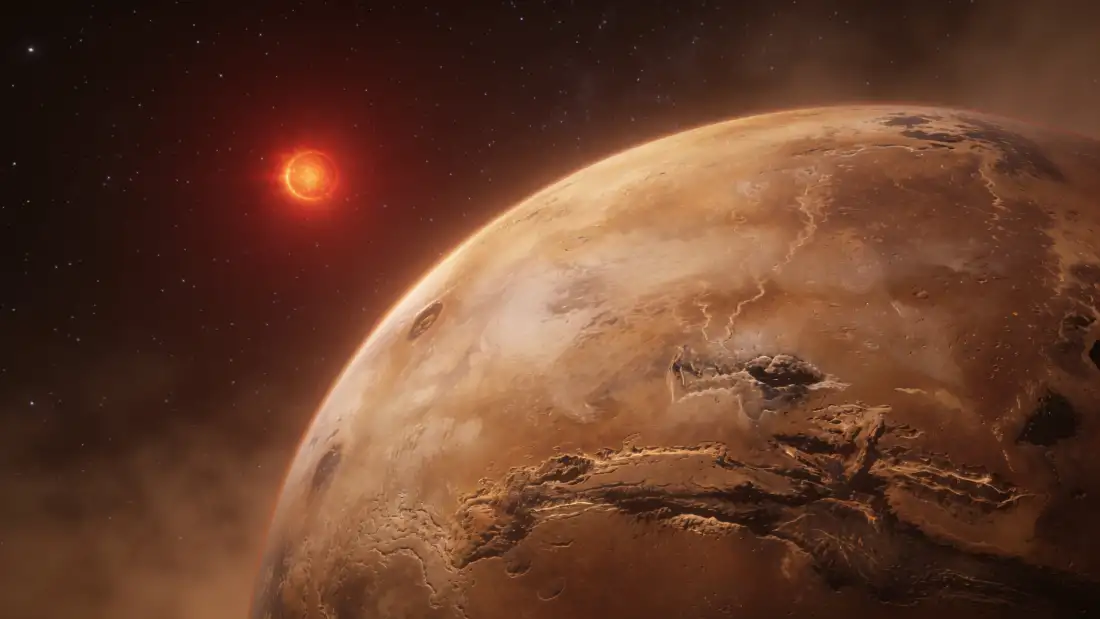
In 2026, scientists discovered a new planet called LHS 1903 d, orbiting a dim red star 116 light-years away. Find out how astronomers used tiny dips in starlight to spot this distant world — and what those dips reveal about the planet's size and orbit.

KEEP READING
Meet the HD 10180 System: 6 Worlds Around One Star

July 7, 2026

Meet the HD 10180 System: 6 Worlds Around One Star

About 127 light-years away, a star called HD 10180 has at least six planets orbiting around it — including one giant world ten times more massive than Jupiter! Learn how scientists found these distant worlds and what makes this system so fascinating.

KEEP READING
GJ 887 c: A World 10.7 Light-Years From Earth

July 7, 2026

GJ 887 c: A World 10.7 Light-Years From Earth

GJ 887 c is one of the closest exoplanets to Earth, sitting just 10.7 light-years away and orbiting a calm, dim red dwarf star. Scientists are still figuring out what this warm, super-Earth-sized world is really like — and whether it could ever support life.

KEEP READING
Spotting LHS 1903 e: The Transit Method

July 4, 2026

Spotting LHS 1903 e: The Transit Method

Astronomers discovered a faraway planet called LHS 1903 e without ever seeing it directly. By watching tiny changes in starlight, scientists figured out its size, weight, and temperature from 116 light-years away. Find out how they did it!

KEEP READING
Say Hello to HD 100508 b, a Giant Planet

July 2, 2026

Say Hello to HD 100508 b, a Giant Planet

Meet HD 100508 b, a giant planet 107 light-years away that is even bigger than Jupiter! Scientists just discovered it in 2026, and it raises some exciting questions about what kinds of worlds exist beyond our solar system.

KEEP READING
How Far Away Is eps Eri b?

July 1, 2026

How Far Away Is eps Eri b?

Epsilon Eridani b is one of the closest known exoplanets to Earth — but close in space still means 10.5 light-years away! Find out how long it would take to travel there, what kind of planet it is, and how scientists discovered it.

KEEP READING
HD 68475 b: Getting to Know a Giant Planet

June 30, 2026

HD 68475 b: Getting to Know a Giant Planet

Meet HD 68475 b, a giant planet about 109 light-years away that is five times heavier than Jupiter! Scientists confirmed it in 2026, and they are still uncovering its secrets — including what it is made of and exactly how far it travels around its star.

KEEP READING
How Did We Find TOI-5734 b?

June 28, 2026

How Did We Find TOI-5734 b?

Scientists found a scorching hot world called TOI-5734 b orbiting a star 106 light-years away — and they did it without ever taking a single photo of the planet. Find out how two clever methods helped crack the case.

KEEP READING
How Far Away Is Barnard e?

June 25, 2026

How Far Away Is Barnard e?

Barnard e is a small planet orbiting one of the closest stars to Earth, just 5.96 light-years away. Even at that short cosmic distance, a trip there would take thousands of years. Find out what makes this nearby world so fascinating!

KEEP READING
Meet GJ 1137 c: A Mini-Neptune Around a Orange Star

June 24, 2026

Meet GJ 1137 c: A Mini-Neptune Around a Orange Star

Meet GJ 1137 c, a planet twice the size of Earth that races around an orange star in less than ten days! It belongs to a type of world called a mini-Neptune — and there is nothing like it in our own solar system.

KEEP READING