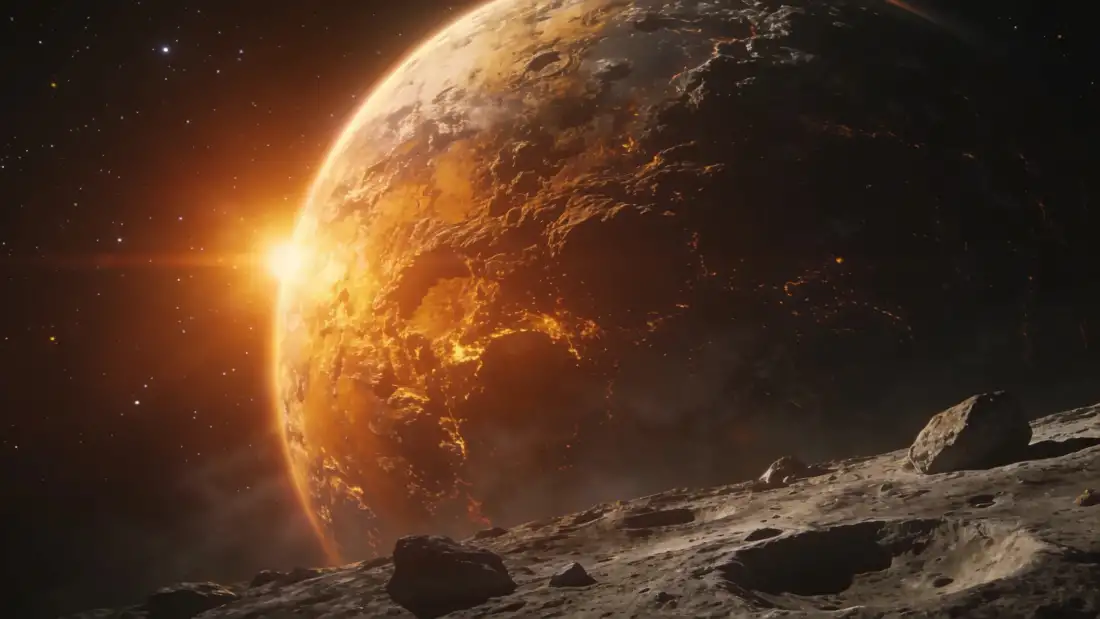
In 2026, astronomers added a new world to our growing list of known exoplanets — planets that orbit stars other than our Sun. That world is TIC 18942729 b, found 376 light-years from Earth. To spot it, scientists used one of their most trusted tools: the transit method. Understanding how that method works tells us a lot about how we explore the cosmos without ever leaving home.
Where in the Sky Is TIC 18942729 b?
TIC 18942729 b sits 376 light-years away from us. A light-year is the distance light travels in one full year — about 9.5 trillion kilometres. So 376 light-years is an enormous distance, one our fastest spacecraft would take millions of years to cross.
At that range, no telescope can take a photo that shows the planet as a clear dot. It is far too small and dim compared to its host star. This is why astronomers had to be clever. Instead of looking for the planet itself, they watched the star very carefully and looked for tiny changes that a passing planet would cause.
So far, TIC 18942729 b is the only planet scientists have confirmed in this system. There could be others hiding in the data, but none have been found yet.
What Kind of Star Does It Orbit?
The host star is called TIC 18942729. Its surface temperature is about 4,360 Kelvin. Kelvin is a unit scientists use to measure temperature, starting from absolute zero — the coldest anything can ever be. To get a rough Celsius equivalent, you subtract about 273, which gives this star a surface around 4,087 degrees Celsius.
Our own Sun has a surface temperature of roughly 5,778 Kelvin, so TIC 18942729 is noticeably cooler than the Sun. Cooler stars tend to glow with an orange or reddish colour rather than the pale yellow-white of our Sun. This type of star is sometimes called a K-type or orange dwarf star, depending on exactly where it falls on the scale astronomers use to sort stars. A cooler, dimmer star also means that any planet orbiting it receives less heat and light per second than Earth gets from the Sun — though exactly how much depends on how close the planet orbits, which in this case turns out to matter a great deal.
How the Transit Method Works
The transit method is built on a simple idea. When a planet passes directly between us and its star, it blocks a tiny fraction of the star’s light. From Earth, the star appears to dim very slightly. Astronomers call this crossing a transit.
Here is how it works, step by step:
- A telescope stares at a star and records its brightness many times every hour.
- Most of the time, the brightness stays steady.
- When a planet moves across the face of the star, a small dip appears in the brightness record.
- The dip lasts for a few hours, then the brightness returns to normal.
- If the same dip appears again and again, at regular intervals, scientists become confident a planet is causing it.
The dip is usually very small — sometimes less than one percent of the star’s total light. Spotting it requires sensitive instruments and careful analysis. If you want to see how this looks in action, the How We Find Them simulator lets you watch a star’s brightness curve change as a planet crosses it.
TIC 18942729 b was discovered this way in 2026. The regular dimming of its host star gave it away.
What the Transit Told Us About TIC 18942729 b
The size of the dip in brightness tells astronomers how big the planet is compared to its star. A larger planet blocks more light and causes a deeper dip. From this, scientists worked out that TIC 18942729 b has a radius — that is, the distance from its centre to its surface — about twice the radius of Earth.
A planet roughly twice Earth’s size falls into a category researchers often call a super-Earth or a sub-Neptune. These are worlds bigger than Earth but smaller than the ice giants Uranus and Neptune in our own solar system. Scientists are still working to understand this group of planets. We don’t have one in our solar system to study up close, which makes worlds like TIC 18942729 b especially interesting to observe.
The transit method also tells astronomers how long one orbit takes, because the dips repeat on a fixed schedule. For TIC 18942729 b, that orbit takes just 1 Earth day — remarkably fast, as we will see in a moment.
The Wobble Method: A Second Way to Check
Astronomers often use a second method alongside the transit method to learn more about a planet. It is called the radial velocity method, or sometimes just the wobble method.
Here is the idea. A planet’s gravity gently tugs on its star as it orbits. This causes the star to wobble slightly — moving a tiny bit toward us, then a tiny bit away, in a repeating pattern. When the star moves toward us, its light shifts very slightly toward the blue end of the colour spectrum. When it moves away, the light shifts slightly toward the red end. Scientists can measure these tiny shifts to figure out the planet’s mass.
Using this method, astronomers found that TIC 18942729 b has a mass about 4.66 times the mass of Earth. Knowing both the size and the mass of a planet helps scientists estimate its density — how tightly packed its material is — which gives clues about what the planet might be made of, whether it is mostly rock, water, gas, or some mixture.
A World That Races Around Its Star
One of the most striking things about TIC 18942729 b is how fast it completes one orbit. Its year lasts just 1 Earth day. That means it is flying around its star at tremendous speed, and it must be orbiting very, very close to that star.
Being so close to its star means TIC 18942729 b almost certainly receives intense heat on its star-facing side. Scientists have not yet measured its temperature directly, but a planet in such a tight orbit around even a cool star would likely be extremely hot. It sits far inside what astronomers call the habitable zone — the range of distances where liquid water could exist on a planet’s surface. TIC 18942729 b is not in that zone, as far as we can tell.
What We Still Don’t Know
Even with a radius and a mass in hand, TIC 18942729 b holds plenty of mysteries. Scientists haven’t measured its surface temperature directly. We don’t know whether it has an atmosphere — a layer of gases surrounding it — or what that atmosphere might contain. We don’t know its exact composition. And we don’t know whether any other planets share this solar system.
Each new piece of data brings us a little closer to understanding worlds like this one. TIC 18942729 b is a good reminder that discovering a planet is really just the beginning of the story. The careful, patient work of learning what that planet is actually like has only just started.