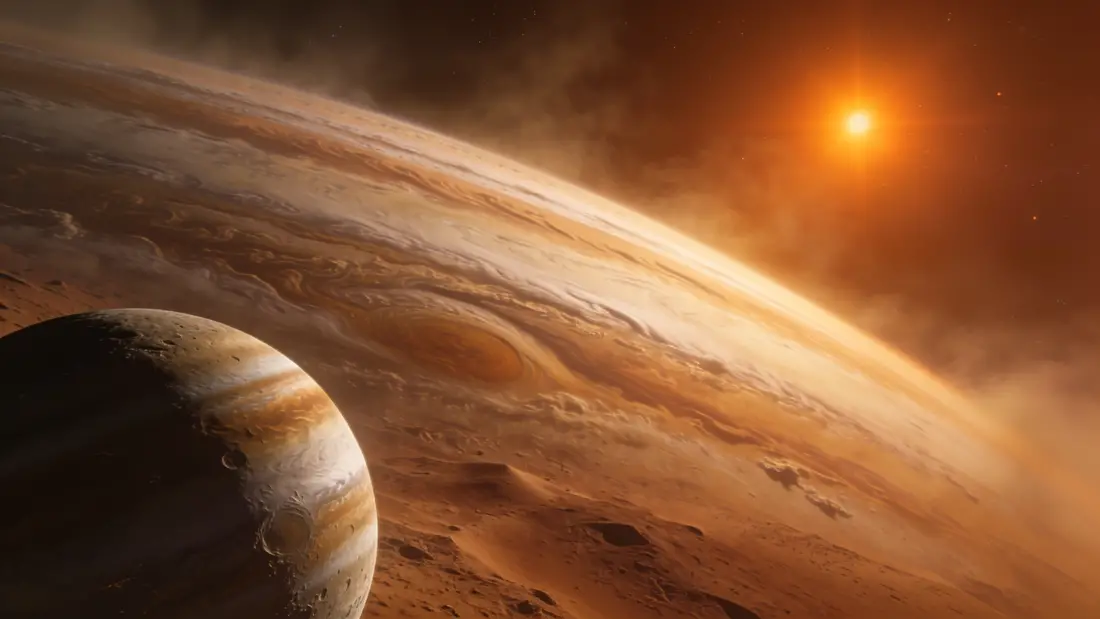
TOI-697 b: A Planet We Cannot See Directly

TOI-697 b: A Planet We Cannot See Directly

September 8, 2026

TOI-697 b: A Planet We Cannot See Directly

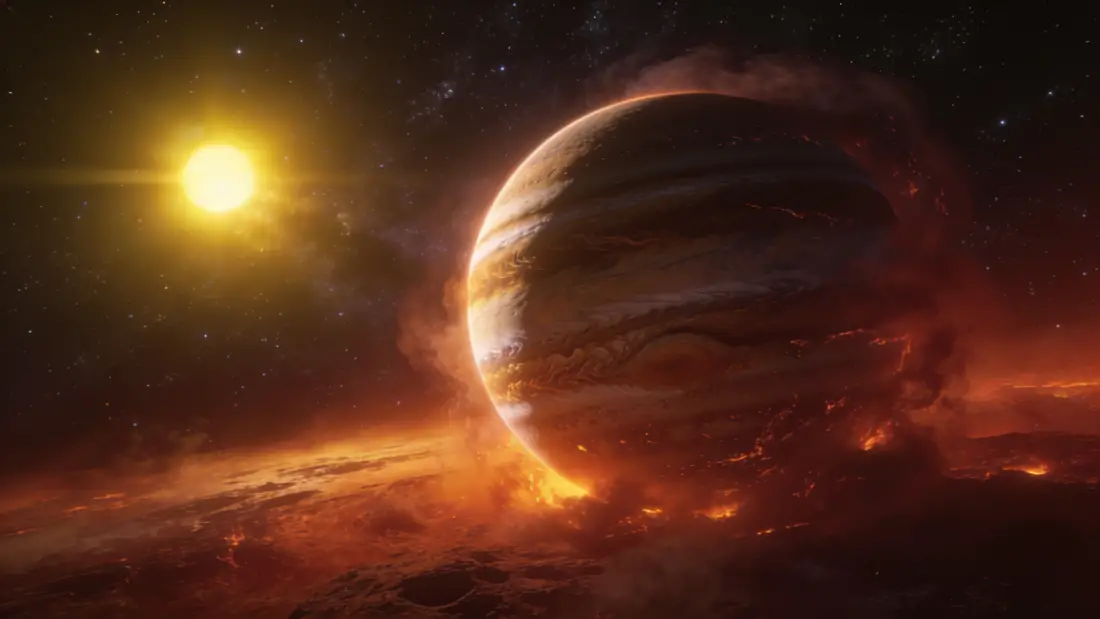
TOI-697 b is a planet so far away that no telescope can photograph it — yet scientists still figured out its size, mass, and temperature just by watching starlight. Find out how two clever tricks turn tiny signals into big discoveries!

KEEP READING
Is Kepler-1636 b in the Goldilocks Zone?

September 7, 2026

Is Kepler-1636 b in the Goldilocks Zone?

Kepler-1636 b is a faraway planet sitting in the Goldilocks Zone — the region around a star where liquid water might exist. Scientists think it could be a mysterious world bigger than Earth, but there's still so much we don't know about it.

KEEP READING
TOI-5532 b: A New World Around TOI-5532

September 6, 2026

TOI-5532 b: A New World Around TOI-5532

Astronomers have confirmed a new planet called TOI-5532 b, located 297 light-years away. It's bigger than Earth but smaller than Neptune, orbits its star in just 5.65 days, and is hot enough to melt lead. What else makes this distant world so interesting?

KEEP READING
Spotting TOI-2453 b: The Transit Method

August 21, 2026

Spotting TOI-2453 b: The Transit Method

How do astronomers find a planet 267 light-years away when they can't even see it? The secret is a tiny dip in starlight — and a clever trick called the transit method. Meet TOI-2453 b, a scorching world discovered by its own shadow.

KEEP READING
TOI-2133 b: A New World Around TOI-2133

August 13, 2026

TOI-2133 b: A New World Around TOI-2133

A planet called TOI-2133 b orbits its star in less than four days and is hot enough to melt most metals. Scientists confirmed this strange world in 2026, and it is already teaching us more about the many kinds of planets that exist across the galaxy.

KEEP READING
K2-138: A Family of Worlds Around One Star

August 10, 2026

K2-138: A Family of Worlds Around One Star

Six planets orbit a single star 661 light-years away, moving in a remarkable rhythm. The newest discovery, K2-138 g, helps scientists understand this fascinating family of worlds — and raises big questions about what these planets are made of.

KEEP READING
Spotting TOI-1732 b: The Transit Method

August 9, 2026

Spotting TOI-1732 b: The Transit Method

Astronomers found a faraway planet called TOI-1732 b using a clever trick — watching for tiny dips in starlight when the planet passes in front of its star. Find out how this method works and what scientists have learned about this hot, fast world 244 light-years away.

KEEP READING
Inside HIP 41378: A Family of 6 Planets

August 4, 2026

Inside HIP 41378: A Family of 6 Planets

Three hundred and forty-seven light-years away, a star called HIP 41378 has six planets circling around it. One of those planets, HIP 41378 d, is giving scientists some of their best clues yet about what faraway worlds might really be made of.

KEEP READING
Kepler-1593 b: A World Where Water Might Be Possible

August 2, 2026

Kepler-1593 b: A World Where Water Might Be Possible

Kepler-1593 b is a faraway planet that sits in the zone around its star where liquid water might be possible. Scientists don't know yet if it has water or life, but its location makes it one of the more interesting worlds worth watching.

KEEP READING
How Did We Find DMPP-6 c?

July 28, 2026

How Did We Find DMPP-6 c?

Scientists can't photograph DMPP-6 c, but they still proved it exists — 178 light-years away! Find out how a tiny starlight wobble and a cool trick called the Doppler effect helped astronomers uncover this mysterious world bigger than Earth but smaller than Neptune.

KEEP READING