Scientists have found thousands of planets around other stars. Here’s the strange part: we almost never actually see them. So how do you find a planet you can’t even look at? Scientists use some very clever tricks. Let’s look at how they catch a hidden world.
Why can’t we just look?
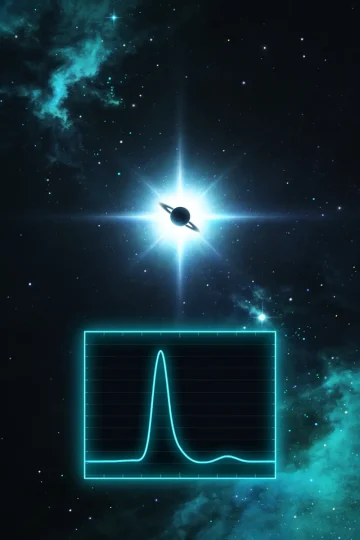
Stars are huge and blazing bright. Planets are small and dark. And they are all incredibly far away.
Imagine standing across a big city at night. Far away, someone is shining a giant searchlight right at you. Now imagine a tiny moth flying close to that light. Could you spot the moth from all the way across the city? No way. The blinding light would swallow it up completely.
That’s exactly the problem with planets. The star is the searchlight. The planet is the moth. The star can be a million times brighter than the planet next to it. So instead of trying to see the planet, scientists do something smart. They watch the star very carefully and look for tiny clues that a planet is hiding nearby.
Trick #1: The tiny dip
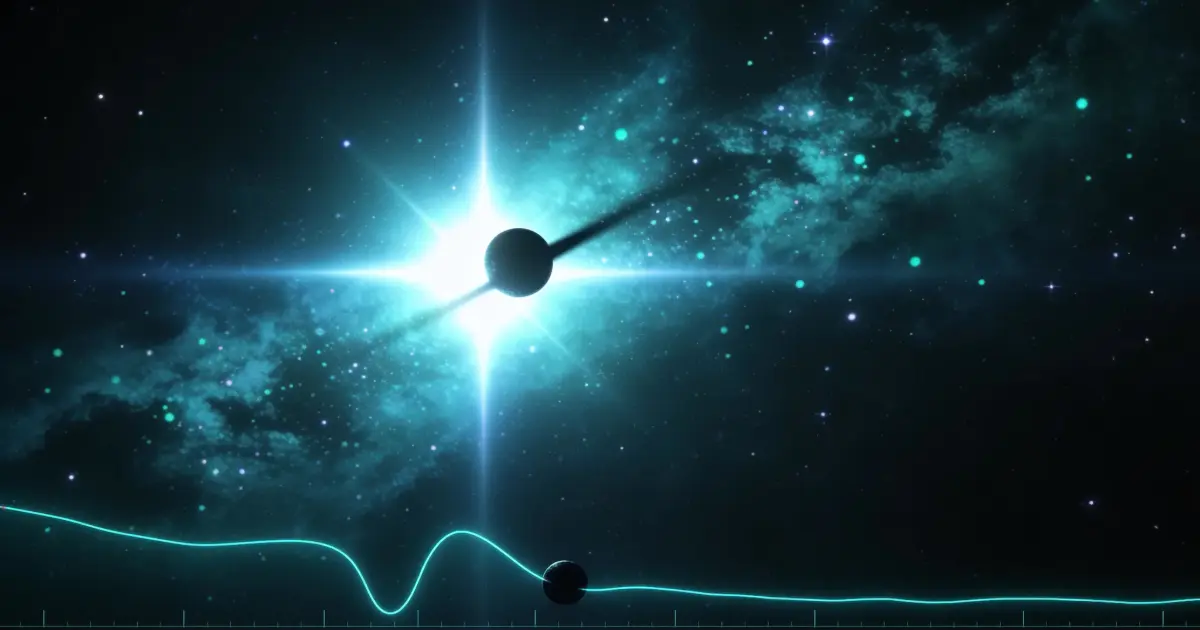
Here’s the first clue. Sometimes a planet’s path takes it right between us and its star. When that happens, the planet blocks a little bit of the star’s light. For a short time, the star looks a tiny bit dimmer. Then the planet moves on, and the star gets bright again.
That little dip in brightness is a giant hint. It tells us a planet is there. And the size of the dip tells us something cool: how big the planet is. A big planet blocks more light and makes a bigger dip. A small planet makes a tiny one.
The best part is that the dip happens over and over, like clockwork. Every time the planet goes around its star and passes in front again, we see another dip. So if we count the days between dips, we learn how long that planet’s “year” is. Two clues from one little shadow!
Now, here’s the catch. These dips are really, really small. A planet as big as Jupiter only blocks about one tiny piece of light out of a hundred. A planet the size of Earth blocks far less than that. Your eyes could never spot it. So scientists built special space telescopes just for this job. One was named Kepler, and it stared at the same patch of sky for years, watching thousands of stars at once for the smallest flicker. Another telescope called TESS is doing the same thing today, scanning almost the whole sky. Together they have found thousands of planets, just by catching little dips of light.
Want to watch a planet make the dip yourself? Open our How We Find Them simulator and try the transit tab. You can make the planet bigger or smaller and watch the dip grow and shrink.
Trick #2: The wobble
The second trick is even sneakier. It uses gravity.
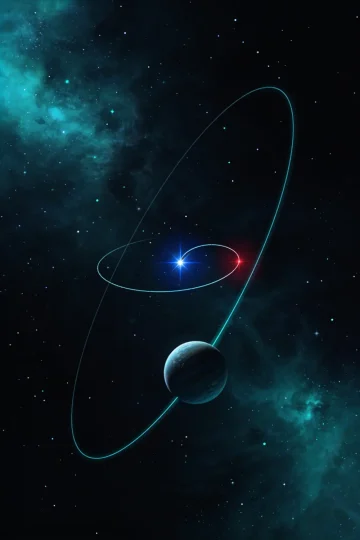
You know that a star’s gravity pulls on its planets and keeps them in orbit. But here’s the thing people forget: the planet pulls back on the star, too. The planet is much smaller, so it can’t move the star a lot. But it can make the star wobble just a little, in a tiny circle, over and over.
Think about two friends holding hands and spinning around in a circle. If one is much bigger, the little one swings way out wide. The big one barely moves — but it does move a little, in a small circle. A planet and its star are like that. The planet swings around in a big orbit, and the star does a tiny wobble in place.
So how do we see a wobble from light-years away? We watch the star’s color. When the star wobbles a little toward us, its light gets squished and turns the tiniest bit more blue. When it wobbles away, the light stretches and turns the tiniest bit more red. Scientists can split a star’s light into a rainbow and measure that color change with amazing care. A heavier planet makes a bigger wobble and a bigger color shift. That tells us how heavy the planet is.
You can see this in the simulator too. Switch to the wobble tab, then make the planet heavier and lighter, and watch the star’s wobble and the wave on the graph grow and shrink.
Two clues are better than one
Now for the really neat part. Some planets give us both clues. They make a dip and a wobble.
The dip tells us how big the planet is. The wobble tells us how heavy it is. When we know both the size and the weight, we can start to guess what the planet is made of. Is it heavy for its size, like a packed ball of rock and metal? Or is it light and puffy, like a giant ball of gas? You can explore that idea in our Mass–Radius tool.
Are there other ways?
Yes, but they are harder. Once in a while, with a powerful telescope, scientists can actually take a picture of a planet. But this only works for big planets that orbit far from their star, so the star’s glare doesn’t drown them out. It’s rare and very tricky.
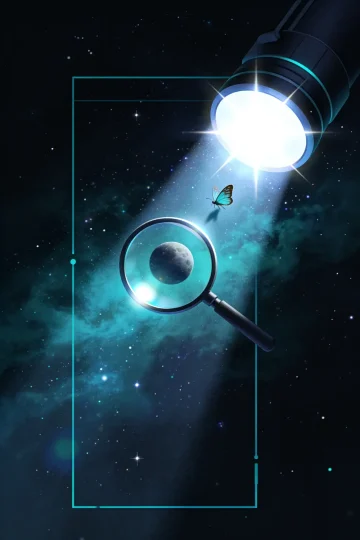
There’s an even wilder trick that uses gravity as a kind of magnifying glass. When a star passes in front of a more distant star, its gravity bends and brightens the far star’s light. If that closer star has a planet, the planet adds its own little flash to the brightening. Scientists watch for that flash. It’s a clever way to find planets that are very far away.
Could you find a planet?
Here’s something amazing: regular people have actually helped discover planets. Telescopes collect so much information that scientists can’t check it all by themselves. So they share it online and let anyone look for the dips. People sitting at home, including kids, have spotted planets the computers missed. Your sharp eyes could be a planet-hunting tool, too.
Try it yourself
The coolest way to understand these tricks is to play with them. Jump into the How We Find Them simulator and drive both the dip and the wobble with your own hands. Then go meet the planets these tricks have found in our Atlas, or figure out what they’re made of in the Mass–Radius tool. Every one of those worlds was a hidden moth — until someone got clever enough to find it.