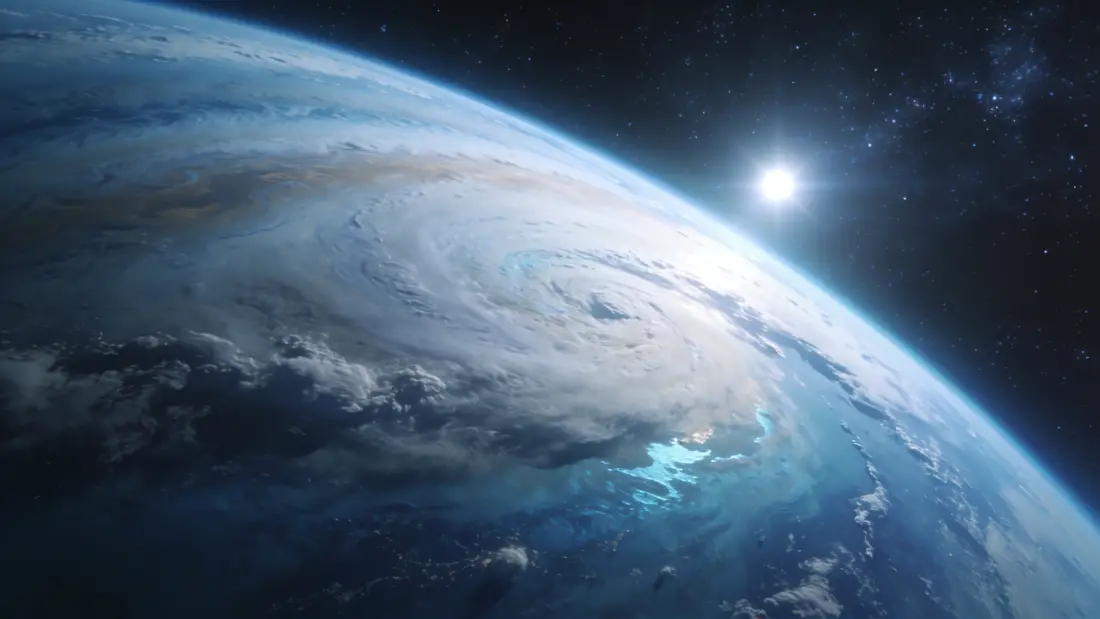
HD 152843 c is an exoplanet — a planet orbiting a star other than our Sun — sitting about 352 light-years from Earth. Scientists found it in 2021, and it has quietly become one of the more interesting worlds to think about when we ask the big question: could liquid water exist somewhere out there? The answer, for now, is a careful “maybe.”
How We Found HD 152843 c
Astronomers discovered HD 152843 c using the transit method. This means they watched the star HD 152843 very carefully and noticed the light from it dipping slightly at regular intervals. That tiny dip happens when a planet passes in front of the star, blocking a small slice of starlight — a bit like a bug walking across a lamp. By measuring how deep the dip is and how often it repeats, scientists can figure out the size of the planet and how long its year is.
HD 152843 c completes one full orbit around its star every 19.5 Earth days. That is a very short year by our standards. Earth takes 365 days. But whether a planet is warm or cold does not depend only on how long its year is — it also depends on the star itself.
What Kind of World Is This?
HD 152843 c is a big planet. Its radius — the distance from its center to its surface — is about 5.94 times Earth’s radius. Its mass is about 9.67 times Earth’s mass. Put those two numbers together and you get a world that is noticeably larger and heavier than our own.
A planet this size falls into a category scientists call a sub-Neptune. Sub-Neptunes are worlds bigger than Earth but smaller than Neptune. We do not have one in our own solar system, which makes them interesting to study. Planets in this size range often have thick, deep atmospheres made mostly of hydrogen and helium, though scientists are not certain what HD 152843 c’s atmosphere looks like — that has not been measured yet.
The estimated surface temperature for HD 152843 c is about 253 K, which works out to roughly -20 degrees Celsius. That is cold — colder than a typical winter day in many places on Earth. But this number comes with an important note. It is an estimate based on the planet’s distance from its star and how much energy the star gives off. The actual temperature could be different depending on what the atmosphere does. A thick atmosphere can trap heat and warm a planet up considerably.
The Star at the Center of It All

Every story about a planet is also a story about its star. HD 152843 is the star this planet orbits. Its surface temperature is about 6,310 K (K stands for Kelvin, a unit scientists use to measure very high temperatures — 0 K is the coldest anything can be). For comparison, our Sun’s surface is about 5,778 K. So HD 152843 is slightly hotter and likely a little larger than the Sun, though the exact size of the star is not something we are listing here from our verified data.
A hotter star puts out more energy. That means a planet needs to be at the right distance to stay in a temperature range where liquid water could exist. Because HD 152843 c is slightly hotter than the Sun, its habitable zone — more on that in a moment — sits a little farther out than ours does.
The Habitable Zone — What It Really Means
The habitable zone is the band of space around a star where conditions might allow liquid water to exist on a planet’s surface. It is sometimes called the “Goldilocks zone” because it is not too hot and not too cold. Scientists calculate it based on the star’s energy output and the planet’s distance.
It is very important to understand what the habitable zone is not. It does not mean a planet has water. It does not mean a planet has life. It simply means that if a planet has the right kind of atmosphere and the right surface conditions, liquid water could be possible there. Being in the zone is a starting point for curiosity, not a final answer.
You can explore how the habitable zone works for different kinds of stars with our habitable zone explorer, which shows the range of distances where conditions might allow liquid water around stars like HD 152843.
Why HD 152843 c Gets Scientists Thinking
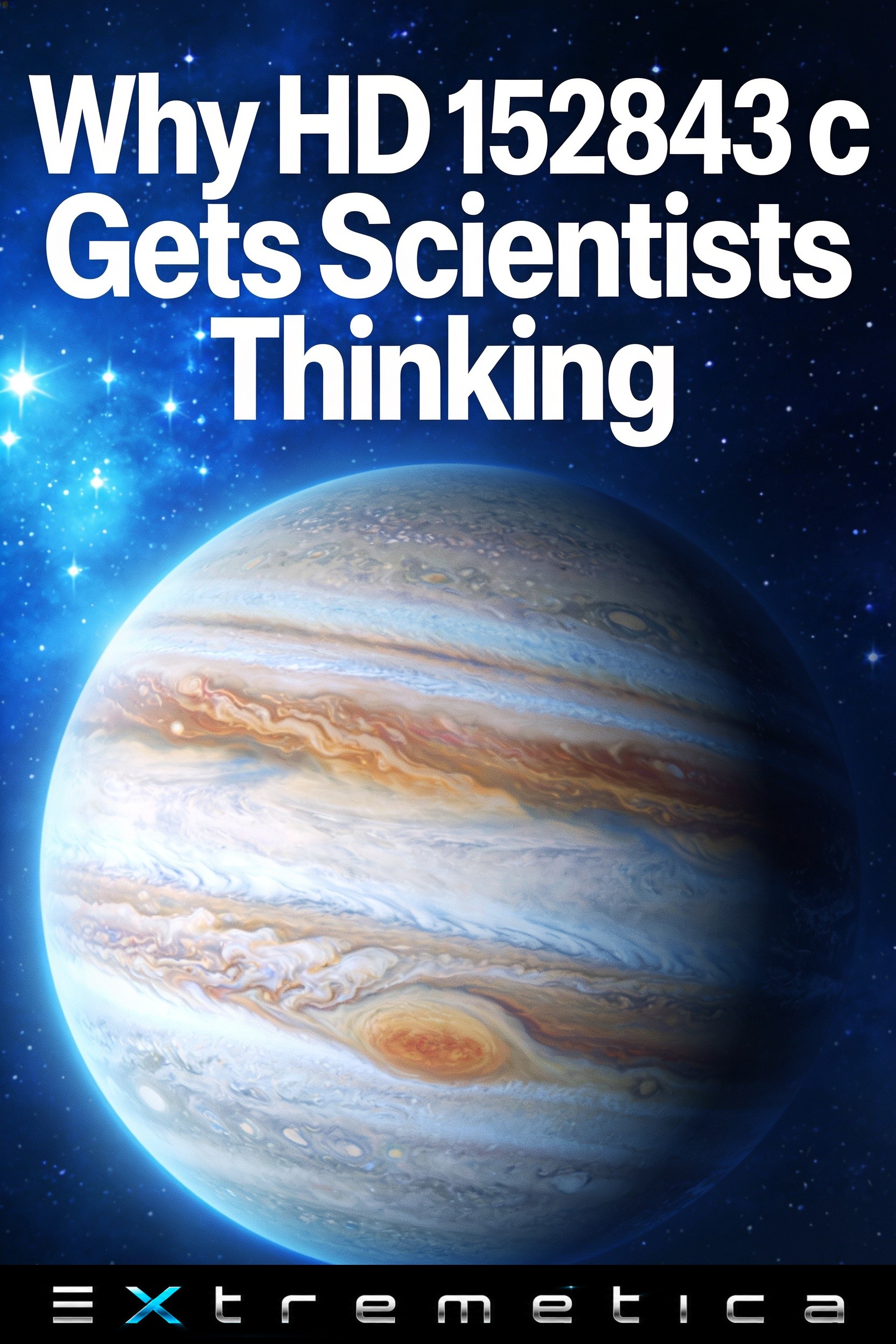
HD 152843 c sits near the inner edge of what scientists estimate to be the habitable zone for its star. That makes it interesting. Its estimated temperature of around -20°C is cool, but not hopelessly frozen. And because a thick atmosphere can raise a planet’s actual temperature well above its estimated one, the door stays open.
The planet’s large size raises questions too. At nearly six times Earth’s radius and nearly ten times its mass, this is not a rocky world like ours — at least, scientists think it probably is not. Worlds of this size are more likely to be wrapped in deep layers of gas. If that is the case, there may not be a solid surface at all, and the conditions we think of as necessary for life as we know it become much harder to imagine. Still, science is full of surprises, and this planet has not been fully studied yet.
A Neighbor in the System
HD 152843 c is not alone. There are two known planets in this system. The other is HD 152843 b, which orbits closer to the star. Multi-planet systems are common in the galaxy, as far as astronomers can tell. Finding more than one planet around a star often means the system formed in an orderly way from a disk of gas and dust — the same basic process that built our own solar system billions of years ago.
Scientists have not yet confirmed whether there are more planets in the HD 152843 system beyond these two. More observations in the future could reveal additional worlds.
What We Still Don’t Know
Honest science means admitting how much is still uncertain. For HD 152843 c, scientists have not yet measured what its atmosphere is made of. They have not confirmed whether the planet has a solid surface. The temperature estimate is just that — an estimate. Whether liquid water could truly exist there depends on many things we cannot see from 352 light-years away.
What we do know is that HD 152843 c is the kind of world that earns a spot on the shortlist of planets worth watching. If you are curious about other worlds with similar potential, our most Earth-like worlds list is a good place to keep exploring. The universe is patient, and so is good science.