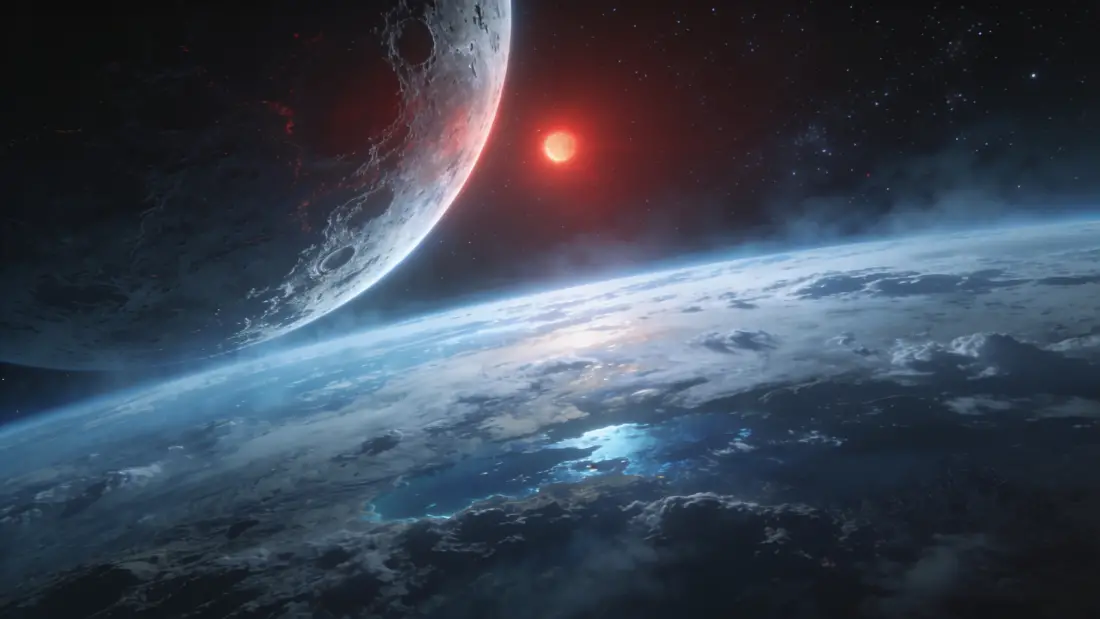
TOI-2257 b is a planet orbiting a small, cool star about 188 light-years from Earth. Scientists spotted it in 2021, and it sits in an interesting place — close enough to its star that liquid water might, under the right conditions, exist on its surface. That does not mean anyone has found water or life there. It just means the question is worth asking.
A World 188 Light-Years Away
TOI-2257 b was discovered in 2021 using the transit method. That is when a planet passes in front of its star, blocking a tiny bit of starlight. A telescope notices the dip in brightness, and scientists can work out that a planet caused it. The transit method has helped astronomers find thousands of worlds, and it is especially useful for spotting planets that orbit fairly close to their stars.
One light-year is the distance light travels in a full year — about 9.5 trillion kilometres. At 188 light-years away, TOI-2257 b is far beyond anything humans could visit with current technology. Still, telescopes let us learn a surprising amount from here on Earth.
So far, TOI-2257 b is the only planet scientists have confirmed in this system. There could be others waiting to be found, but as of now, it travels alone around its star.
A Cool Star and a Close Orbit
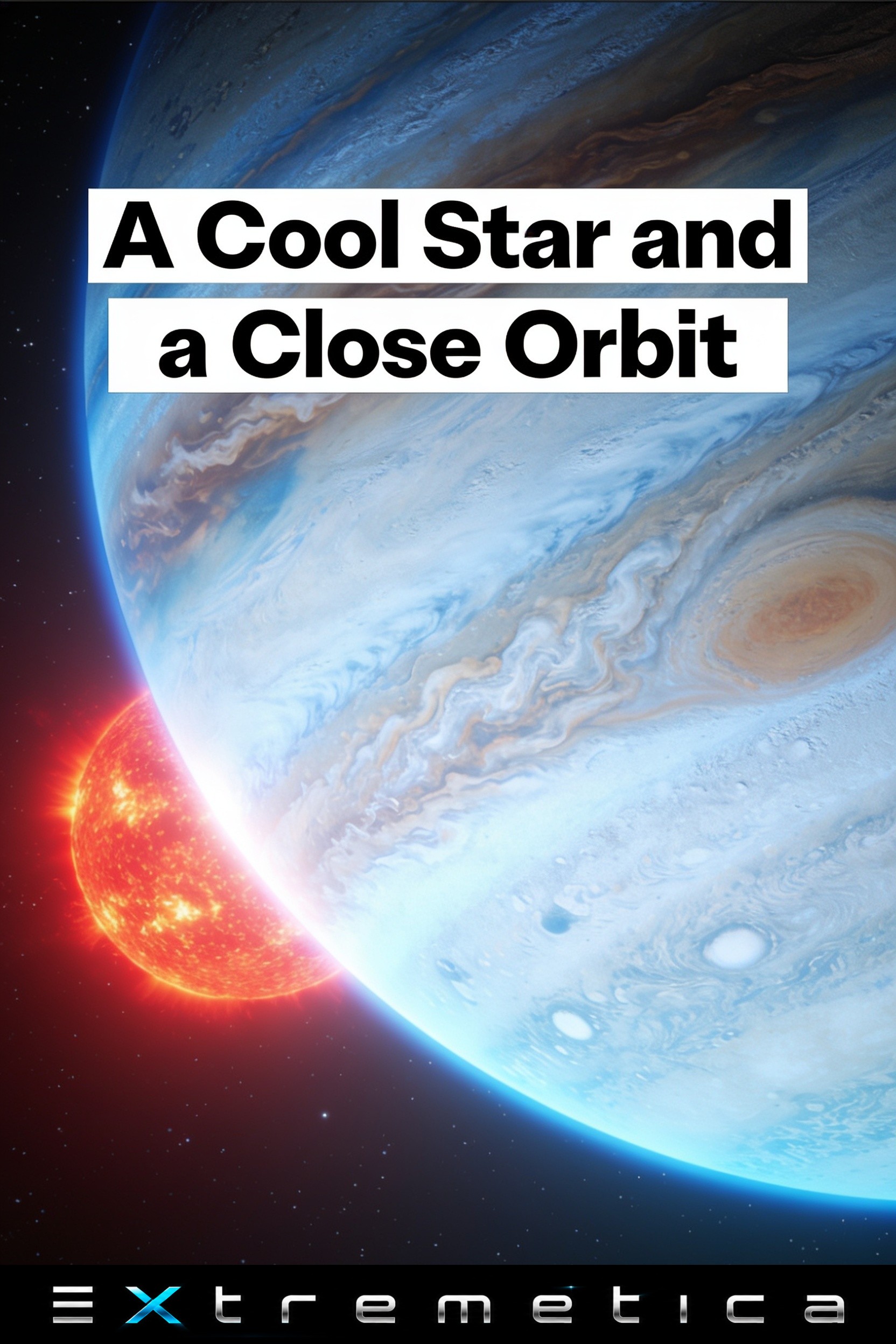
The star at the centre of this system is called TOI-2257. Its surface temperature is 3,430 K (K stands for kelvin, a unit scientists use to measure very high or very low temperatures — 0 K is the coldest anything can be). To put that in perspective, our own Sun’s surface runs at around 5,778 K. So TOI-2257 is noticeably cooler and dimmer than the Sun.
Stars this cool are called red dwarfs. They glow with a deep orange-red colour and give off much less heat and light than stars like the Sun. Red dwarfs are the most common type of star in our galaxy, and they are a popular target in the search for habitable worlds.
Because the star is so dim, a planet needs to orbit quite close in order to receive enough warmth for liquid water to be possible. TOI-2257 b does just that. It completes one full orbit in only 35.2 Earth days — less than a quarter of our year. That tight path puts it in what astronomers consider a promising location around this particular star.
Inside the Habitable Zone — What That Really Means
The habitable zone is the band of space around a star where conditions might allow liquid water to exist on a planet’s surface. It is sometimes called the “Goldilocks zone” — not too hot, not too cold. You can explore how this zone works using our habitable zone explorer.
TOI-2257 b is thought to sit within, or very close to, the habitable zone of its star. But being inside the habitable zone is only the beginning of the story. It tells us that liquid water is possible — not that it is actually there. A planet could sit perfectly in the zone and still have no water at all, if it has no atmosphere to hold warmth, or if its atmosphere is made of gases that strip water away.
Mars, for example, is near the edge of the Sun’s habitable zone, but it is cold and dry on its surface today. Venus sits inside the zone too, yet its thick, choking atmosphere makes it far too hot for life as we know it. Being in the zone is a hopeful sign, not a guarantee.
Size, Mass, and What Lies Beneath
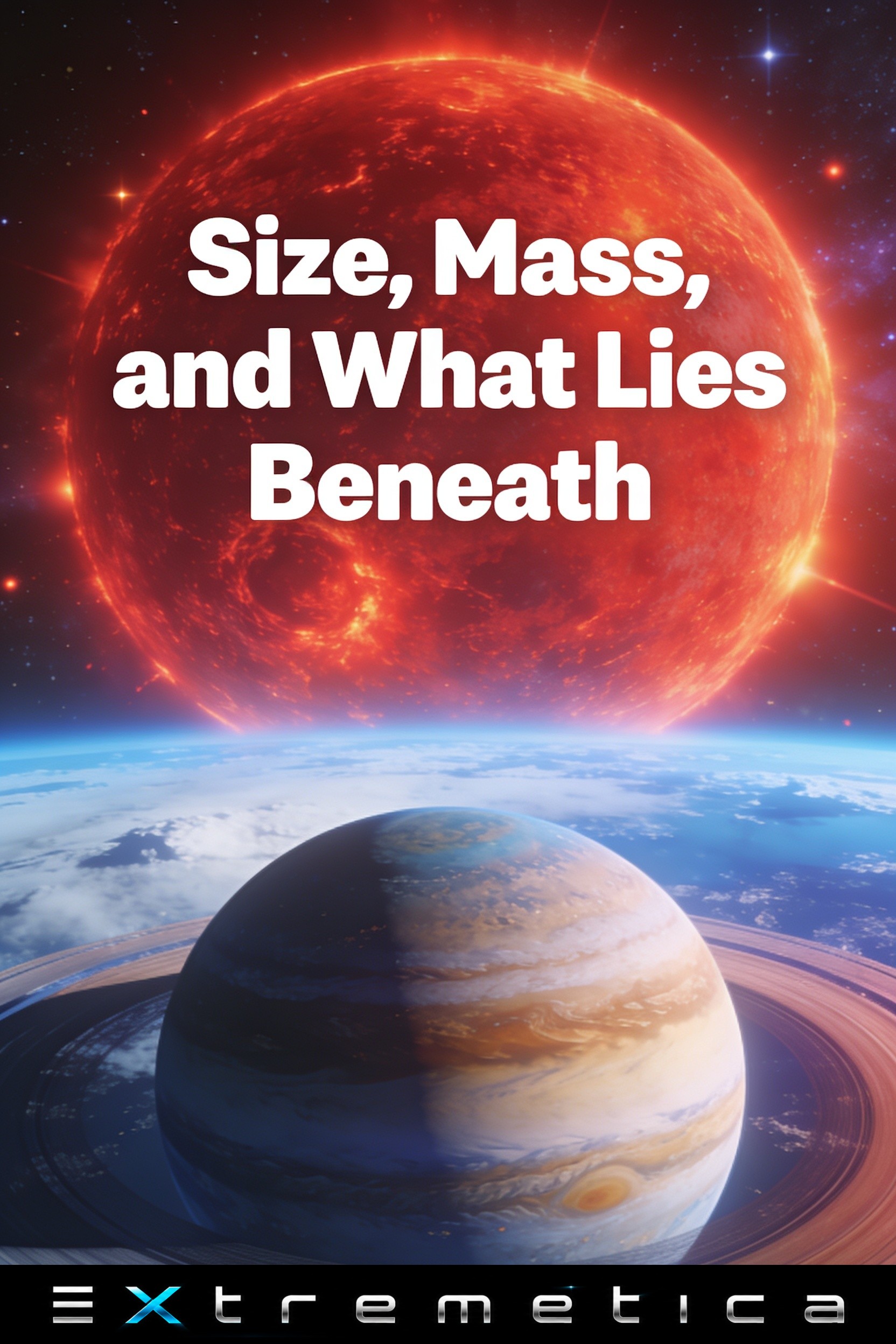
TOI-2257 b has a radius of 2.19 times Earth’s and a mass of 5.45 times Earth’s. Knowing both numbers is useful. When scientists combine radius and mass, they can estimate a planet’s density — how tightly packed its material is. Density gives clues about what a planet is likely made of.
These numbers suggest TOI-2257 b falls into a category sometimes called a sub-Neptune or super-Earth — a planet larger than Earth but smaller than the ice giants like Uranus or Neptune. Planets in this size range are common in the galaxy, but they are still poorly understood. Scientists are not sure whether they tend to have rocky surfaces, deep oceans, thick gassy envelopes, or some mixture of all three.
A planet more than twice Earth’s width could have a thick atmosphere pressing down hard on whatever surface lies below. That might prevent liquid water from existing on a surface the way we know it. Or it might create conditions we have not fully imagined yet. Scientists honestly do not know, and that uncertainty is important to keep in mind.
Temperature: Promising but Uncertain
The estimated temperature of TOI-2257 b is about 256 K, which works out to roughly -17 degrees Celsius. That is cold — below the freezing point of water at normal pressure. On Earth at that temperature, you would need a very warm coat.
However, this figure is what scientists call an equilibrium temperature. It is a rough estimate of how warm a planet would be if it absorbed and released starlight in a simple, even way, with no atmosphere at all. Real planets are almost never that simple.
An atmosphere can act like a blanket, trapping heat and pushing the actual surface temperature well above the equilibrium figure. Earth’s own equilibrium temperature is well below freezing, yet our planet is warm enough for life largely because of our atmosphere. If TOI-2257 b has the right kind of atmosphere, its surface could be warmer than -17 C. If it has little or no atmosphere, it could be colder and harsher. Scientists have not measured its atmosphere yet.
What Would Make TOI-2257 b Friendlier to Life
For TOI-2257 b to be genuinely friendly to life — at least life as we understand it — several things would need to line up. It would need a stable atmosphere, one thick enough to keep temperatures above freezing in at least some places, but not so thick that it crushed or cooked the surface. It would need a source of liquid water. And it would need to avoid the strong radiation bursts that red dwarf stars sometimes send out, which can strip away a planet’s atmosphere over time.
None of those things have been confirmed for TOI-2257 b. Future telescopes may be able to study the light passing through its atmosphere — if it has one — to look for gases that might hint at habitability. Until then, this planet remains a genuinely interesting candidate. If you want to see how it compares with other promising worlds, take a look at our most Earth-like worlds list.
TOI-2257 b reminds us that finding a planet in the right place is only the first step. The universe is patient, and so is good science. The real answers will come slowly, carefully, and honestly.