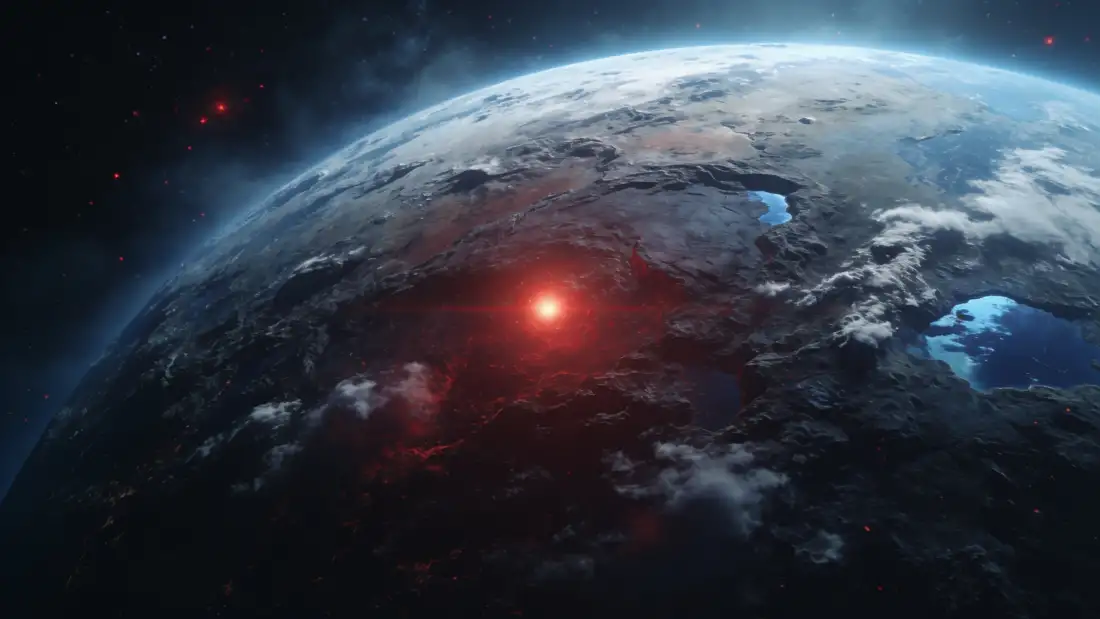
TOI-2094 b is a world roughly twice the size of Earth, orbiting a faint, cool star 163 light-years away. It was confirmed in 2026, and already it raises some interesting questions about what lies beneath its surface. Worlds like this one sit in a curious middle ground — too big to be simply rocky, but much smaller than the giant planets in our own solar system.
Where in the Sky Is TOI-2094 b?
When we say TOI-2094 b is 163 light-years away, that means light traveling at about 300,000 kilometers per second would still take 163 years to get there. In everyday terms, that is enormously far. Yet in the scale of our galaxy, the Milky Way, it is actually a fairly close neighbor.
To find the star TOI-2094 in the night sky, you would need a telescope. It is not visible to the naked eye because it gives off much less light than our Sun. Scientists haven’t pinpointed a single well-known constellation direction in the verified data we have, so we won’t guess at one here. What we do know is that 163 light-years puts this system well within the part of the galaxy astronomers can study in good detail with current telescopes.
How Scientists Found TOI-2094 b
TOI-2094 b was discovered using the transit method. This is one of the most common ways to find planets that orbit other stars, which astronomers call exoplanets. Here is how it works: when a planet passes in front of its star, it blocks a tiny slice of the star’s light. A telescope watching that star sees the light dip, just a little, then return to normal. If the same dip happens again and again at a regular interval, scientists know a planet is crossing in front of the star on each orbit.
The “TOI” in the planet’s name stands for TESS Object of Interest. TESS is a space telescope designed to watch large patches of sky and catch exactly these small, regular dips in starlight. Confirming that a signal is truly a planet — and not something else, like two stars orbiting each other — takes extra work with other telescopes. That follow-up process led to the official confirmation of TOI-2094 b in 2026.
Size and Mass: What the Numbers Tell Us
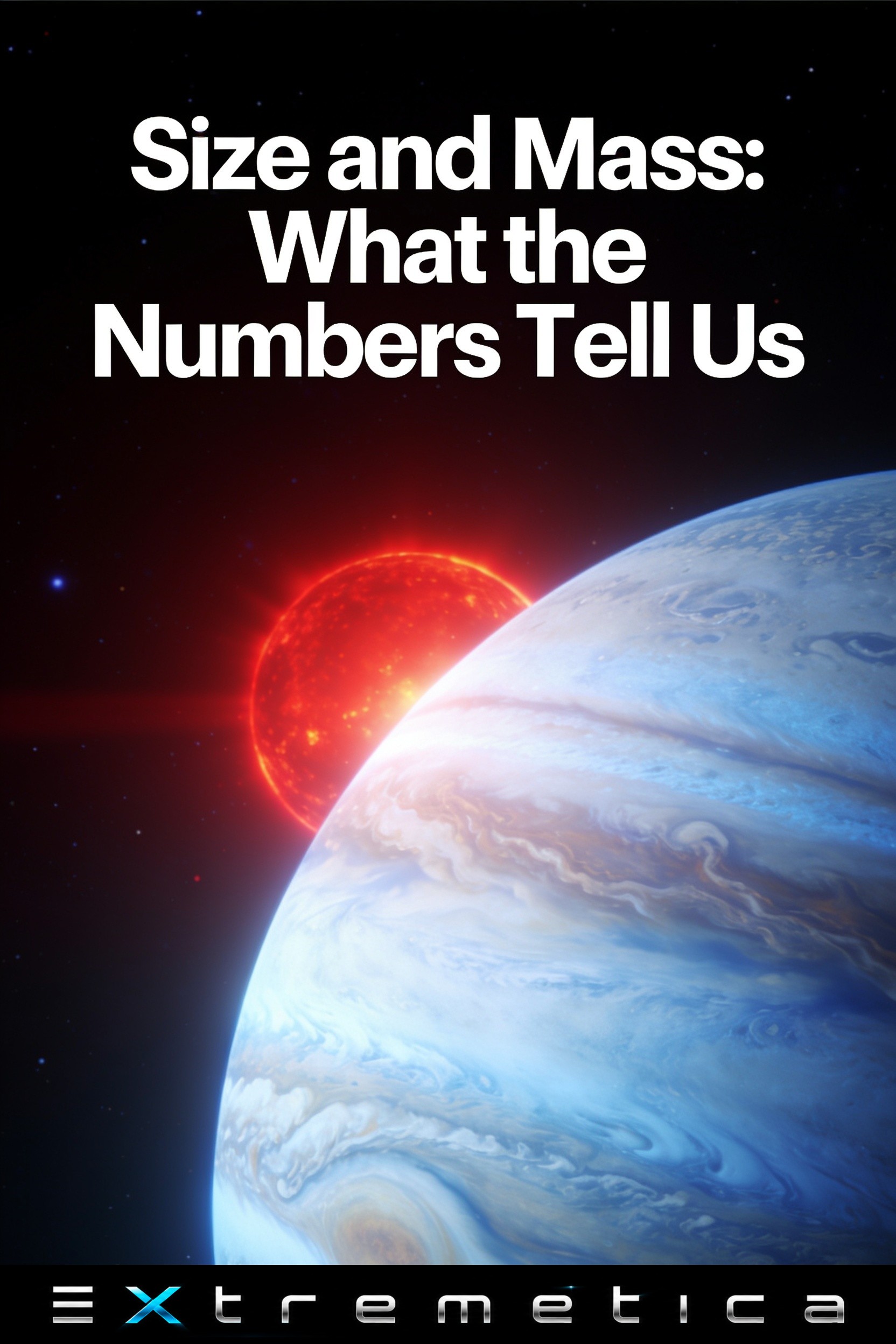
TOI-2094 b has a radius of 1.9 times Earth’s radius. That means if you could line up copies of Earth side by side, you would need almost two of them to match the width of TOI-2094 b. Its mass is 4.27 times Earth’s mass. Mass is the amount of matter packed into something — in plain terms, how much stuff is there.
These two numbers together — size and mass — are very useful. They let scientists calculate density, which is how tightly packed that matter is. A small, heavy world is dense, suggesting lots of rock or metal. A large, light world is less dense, suggesting lots of gas or water. You can explore how different worlds compare using the mass-radius diagram, which plots radius against mass for hundreds of known exoplanets at once.
For TOI-2094 b, the density works out to something that scientists think is higher than a pure water world but probably lower than a pure iron ball. That puts it in interesting territory. It is likely not a simple rocky planet like Earth, but it is probably not a thick ball of gas either.
What Might Be Inside
Scientists use the word bulk composition to describe what a planet is mostly made of on the inside. For TOI-2094 b, the radius and mass suggest it could have a rocky core surrounded by a layer of water — possibly in a very compressed, unusual form under high pressure — or perhaps a thin atmosphere made of heavier gases. We honestly are not sure yet.
Worlds around 1.5 to 2 times Earth’s radius sit in what researchers sometimes call the radius gap — a range of sizes where planets seem to be either rocky with almost no atmosphere, or worlds that hold on to a lightweight gas envelope. TOI-2094 b sits right near the upper edge of that range. Whether it has kept a meaningful atmosphere is one of the things scientists would love to find out. Right now, we don’t have that measurement.
If you enjoy seeing how planetary sizes stack up visually, the size comparison tool lets you place TOI-2094 b next to Earth, Neptune, or any other world to get a feel for the difference.
A Freezing Fast Year
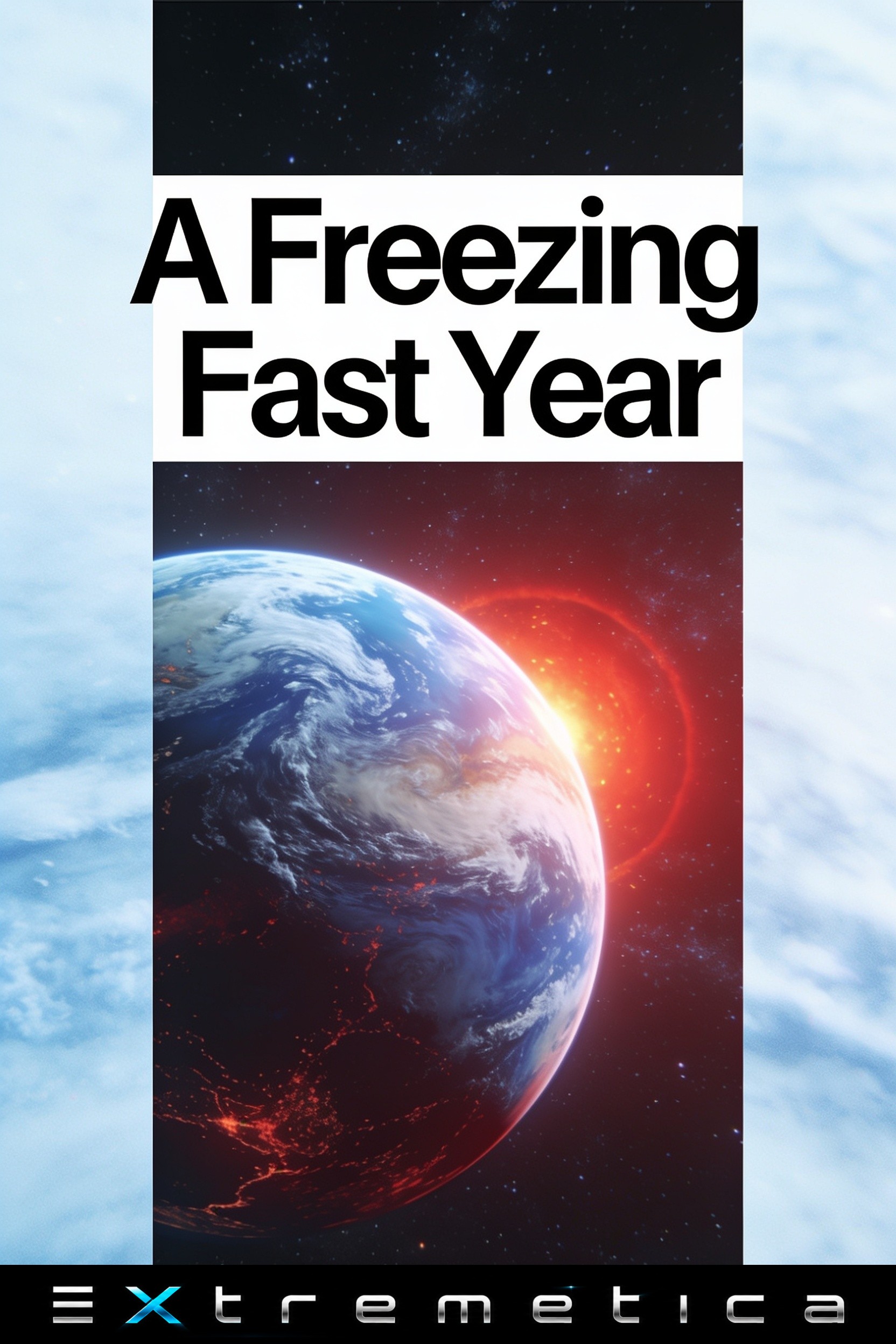
One orbit around its star takes TOI-2094 b just 18.8 Earth days. That is its year. In the time it takes you to finish a school month, this planet has already looped around its star once and started a second trip.
Such a short year means the planet is orbiting very close to its star. Yet its estimated temperature is about 276 K, which is roughly 3 degrees Celsius — just above the freezing point of water. That might sound surprising for a planet so close to its star, but the star itself is very cool and dim, as you will read below. The temperature estimate is based on how much energy the star gives off and how close the planet orbits. Scientists describe this as the planet’s equilibrium temperature — that is the temperature a simple model predicts, assuming the planet reflects some sunlight and has no greenhouse effect. A real atmosphere, if one exists, could make the surface warmer or cooler than this estimate.
The Dim Red Star Next Door
The star TOI-2094 has a surface temperature of 3,435 K. Our own Sun’s surface is around 5,778 K — so TOI-2094 is much cooler. Stars this cool glow with a deep orange-red color and are called M dwarfs or red dwarfs. They are the most common type of star in the galaxy.
Red dwarfs burn their fuel slowly and can live far longer than stars like our Sun. They are also much smaller and dimmer. That dimness is exactly why TOI-2094 b can orbit so closely and still have a relatively low equilibrium temperature. The same orbit around a hotter star like our Sun would make the planet scorching hot.
One Planet So Far
As of now, TOI-2094 b is the only confirmed planet in this system. That does not mean it is alone — it simply means no other planets have been detected yet. Many star systems that at first appeared to hold just one planet were later found to have others once astronomers looked more carefully. The tools and methods for finding smaller or more distant planets are improving steadily, so the picture of this system may change over time.
TOI-2094 b is a good example of why super-Earths — planets somewhat larger than Earth but smaller than Neptune — are so fascinating to study. They have no close match in our own solar system, which means every new measurement adds a piece to a puzzle we are only beginning to understand.