
Of all the worlds discovered beyond our solar system, Proxima Cen b holds a special place. It orbits the star closest to our Sun, sitting just 4.24 light-years away. That sounds small on a cosmic scale, but as you’ll see, it still represents a staggering distance.
Our Nearest Stellar Neighbor
Proxima Cen b orbits a star called Proxima Centauri. This star is part of the Alpha Centauri system, which is the closest group of stars to our Sun. Proxima Centauri itself is a red dwarf — a type of star that is much smaller, cooler, and dimmer than our Sun. While our Sun has a surface temperature of about 5,800 K (K stands for Kelvin, a scale scientists use to measure heat), Proxima Centauri’s surface is only about 2,900 K. That is roughly half as hot. Red dwarfs like this are the most common type of star in the Milky Way, the galaxy we live in.
Proxima Centauri sits 4.24 light-years from Earth. A light-year is the distance light travels in one year — about 9.46 trillion kilometers. So 4.24 light-years is an enormous stretch of empty space, even though it is our cosmic backyard. So far, scientists have found two planets in this system.
How Scientists Found Proxima Cen b
Proxima Cen b was discovered in 2016. Scientists used a technique called the radial velocity method to find it. Here is how that works. When a planet orbits a star, its gravity gives the star a tiny tug. That tug makes the star wobble very slightly back and forth. As the star wobbles toward us, its light shifts to slightly shorter wavelengths. As it wobbles away, the light shifts to slightly longer wavelengths. Scientists can detect these tiny shifts and use them to figure out that a planet is there.
The radial velocity method is very good at measuring a planet’s mass and orbit. It is less good at measuring a planet’s size. That is worth keeping in mind when we look at what we know about this world.
A World Remarkably Close to Earth’s Size
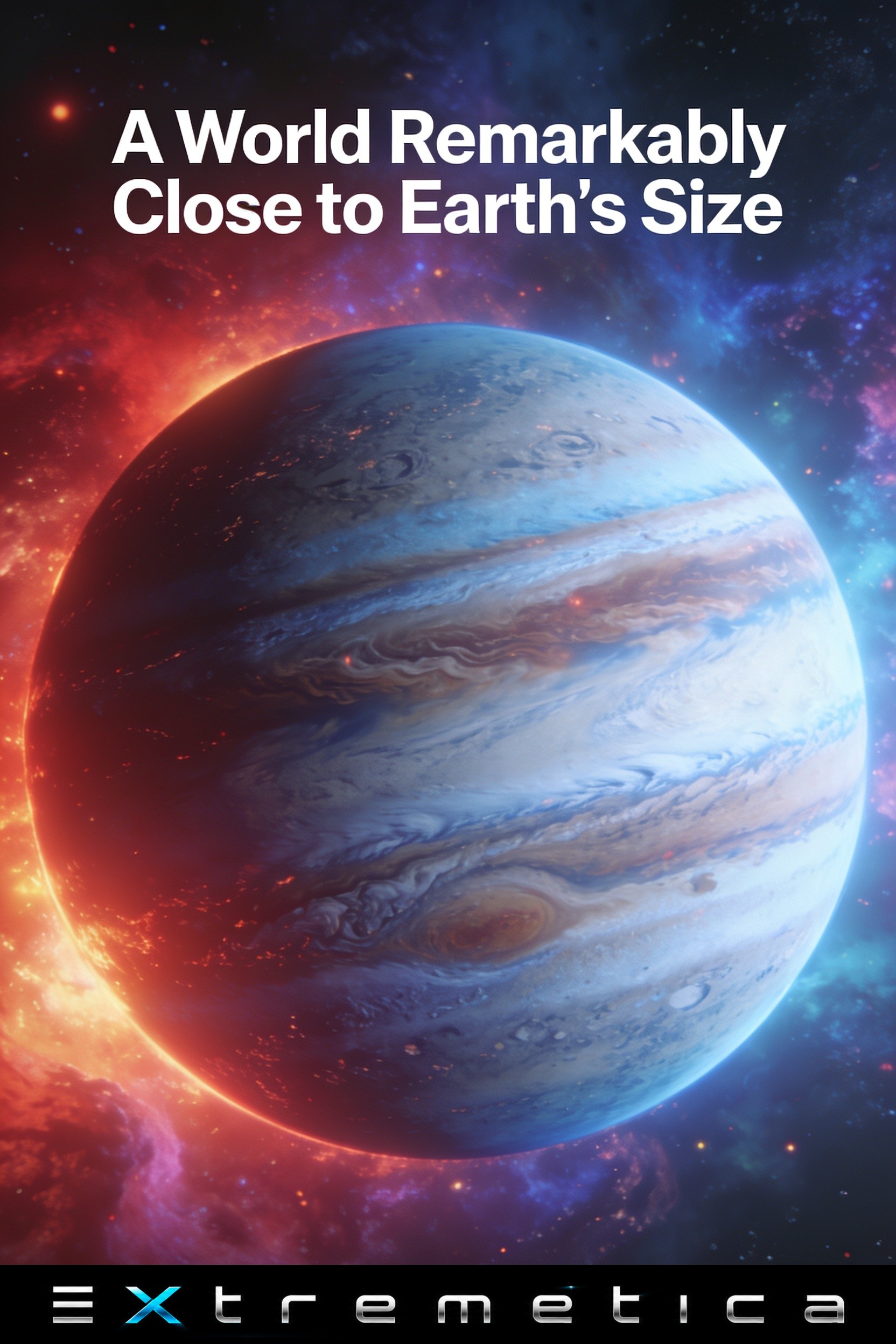
The numbers for Proxima Cen b are striking. Its radius — that is, the distance from its center to its surface — is about 1.02 times Earth’s radius. Its mass, meaning how much matter it contains, is about 1.06 times Earth’s mass. In other words, this planet is very close to Earth in both size and weight.
Those similarities are interesting, but they don’t tell us what the planet is made of. A world this size could be a rocky planet like Earth, or it could have a very different composition. Scientists haven’t been able to confirm the surface type yet. Being close to Earth in size is one piece of the puzzle, but it is far from the whole picture.
A Year in Just 11 Days
One of the most striking things about Proxima Cen b is how fast it orbits its star. One full orbit — the planet’s year — takes only 11.2 Earth days. That means this world zips around Proxima Centauri in less than two of our weeks.
This happens because the planet orbits very close to its star. Proxima Centauri is much dimmer than our Sun, so a planet needs to be quite close to receive any warmth at all. Scientists describe the region around a star where temperatures could allow liquid water as the habitable zone. Because Proxima Centauri is so cool and faint, its habitable zone is much closer in than ours is. Proxima Cen b sits within that zone, which has made it a subject of great interest.
However, sitting in the habitable zone does not mean a planet has liquid water. It simply means the distance is right for it to be possible under the right conditions. Many other factors — like whether the planet has an atmosphere, and what that atmosphere is made of — matter just as much. Scientists haven’t been able to measure those things for Proxima Cen b yet.
Cold, Dark, and Bathed in Radiation
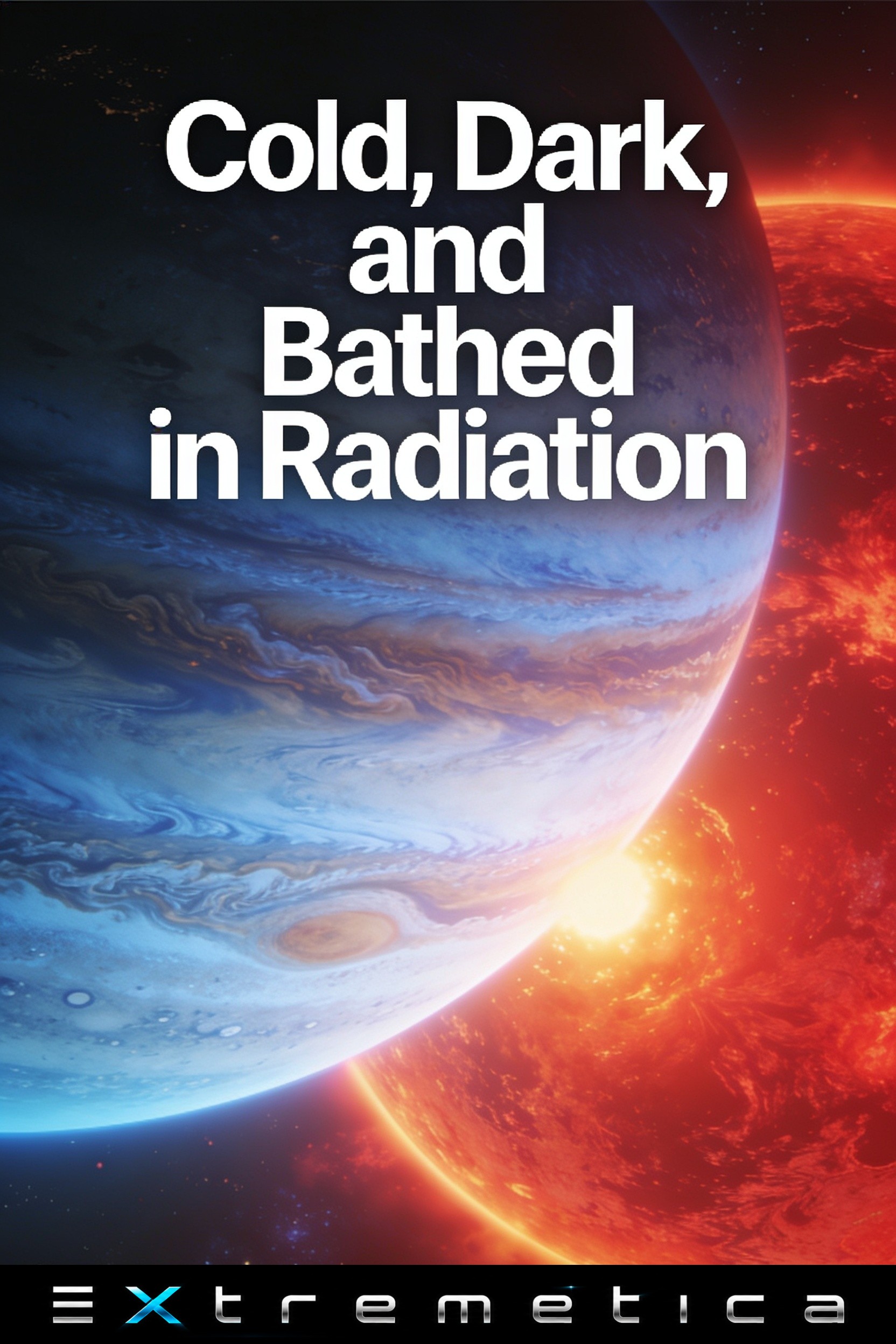
The likely surface temperature of Proxima Cen b is estimated at about 218 K, which is roughly -55 degrees Celsius. That is colder than the coldest places on Earth. It is worth being careful here: this is an estimate based on the planet’s distance from its star and assumptions about its surface. The actual temperature would depend heavily on whether the planet has an atmosphere and how thick that atmosphere is. Scientists are honest that there is a lot of uncertainty here.
There is another challenge. Red dwarf stars like Proxima Centauri can be quite active. They sometimes release powerful bursts of energy called stellar flares. These flares send out a lot of high-energy radiation — the kind that can strip away a planet’s atmosphere over time. Whether Proxima Cen b has held onto any atmosphere despite this bombardment is one of the biggest open questions about this world. We simply don’t know yet.
Because the planet orbits so close to its star, scientists also think it might be tidally locked. That means one side of the planet would always face the star, just as one side of our Moon always faces Earth. If that is true, one side would be in permanent daylight and the other in permanent darkness. This would create extreme differences in temperature across the planet’s surface.
How Far Is 4.24 Light-Years, Really?
It is easy to read “4.24 light-years” and not quite feel the scale of it. Let’s try to put it in perspective. Light travels at about 300,000 kilometers per second — the fastest speed we know of. Even at that speed, a beam of light takes more than four years to travel from Proxima Centauri to us. If you wanted to send a radio message to anyone living there (if anyone did), you would wait over eight years for a reply.
In kilometers, 4.24 light-years is roughly 40 trillion kilometers. That is 40 followed by twelve zeros. Our most distant spacecraft, launched decades ago, have barely scratched the edge of our own solar system after all that time. You can explore how distances like this compare using the Cosmic Map on this site.
Could We Ever Get There?
With today’s technology, reaching Proxima Centauri would take tens of thousands of years. Even the fastest spacecraft humans have ever launched would need an almost unimaginable amount of time to cross that gap. Some scientists have proposed future concepts — like laser-propelled tiny probes — that could theoretically make the journey in a few decades. But those ideas are still in early stages, and none have been built or launched.
If you are curious about what travel times to nearby stars would actually look like at different speeds, the Distance and Travel Time tool lets you explore that in a hands-on way.
Proxima Cen b remains one of the most studied and discussed exoplanets — worlds orbiting stars other than our Sun — precisely because it is so close. Every new telescope and every new technique gives us a slightly clearer look at this small, fast-moving, still-mysterious world just next door on the cosmic scale. There is still much to learn.