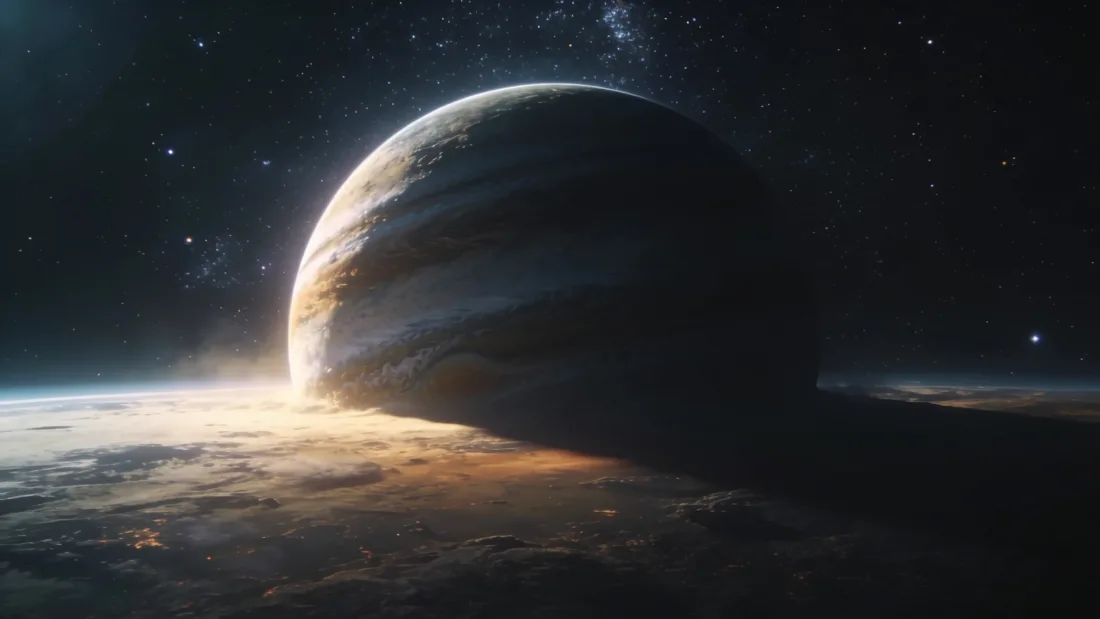
Somewhere in our galaxy, a small dim star called GJ 3378 is being orbited by a world larger than Earth. Scientists have confirmed that world — named GJ 3378 b — and even though there is still a lot to learn about it, every new confirmed planet helps us build a fuller picture of how common planets really are.
The Star: Small, Cool, and Very Common
GJ 3378 is a red dwarf — a type of star that is smaller, cooler, and far dimmer than our Sun. Red dwarfs burn their fuel slowly, which means they can live for tens of billions of years, much longer than stars like ours. They also happen to be the most common type of star in the Milky Way. Scientists estimate that roughly three out of every four stars in our galaxy are red dwarfs.
Because red dwarfs are so dim, they are hard to spot with the naked eye. GJ 3378 is no exception. You would not be able to see it from your backyard without a telescope. But that dimness is actually useful for planet hunters, as you will see in a moment.
The Planet: A World Bigger Than Earth
GJ 3378 b is what astronomers call a super-Earth — a planet that is larger than Earth but smaller than the ice giants Neptune and Uranus in our own solar system. The name does not mean it is Earth-like in any other way. It just refers to size.
GJ 3378 b orbits very close to its star. Its year — the time it takes to complete one full orbit — is much shorter than Earth’s. A planet that close to its star receives a lot of energy, even from a cool red dwarf. Scientists have not yet pinned down every detail about this world, and some measurements are still careful estimates rather than firm facts. What we can say is that it sits in a very different situation from Earth, both in size and in how close it hugs its star.
You can browse other confirmed worlds like this one in the planet atlas, where super-Earths around red dwarfs show up again and again.
How Scientists Found It: The Transit Method
Finding a planet you cannot see directly is a real puzzle. One of the most successful solutions is called the transit method. Here is how it works.
Imagine watching a firefly cross in front of a lamp. The lamp dims just a tiny bit while the firefly is in the way. Planets do the same thing to their stars. When a planet passes between us and its star, it blocks a small fraction of the star’s light. A telescope watching the star will record that tiny dip.
Scientists look for dips that happen on a regular schedule. If the light dims by the same amount every few days, that is a strong sign a planet is orbiting the star and crossing our line of sight each time around. Because red dwarf stars are small and dim, a planet passing in front of one blocks a larger share of the total light compared with a giant star. That makes the dip easier to measure — which is one reason red dwarfs are popular targets for planet hunters.
Confirming a planet still takes careful work. Scientists have to rule out other explanations, such as two stars orbiting each other. Only after that checking process does a planet become officially confirmed.
Temperature and Habitability: An Honest Look

One of the first questions people ask about any new exoplanet — a planet orbiting a star other than our Sun — is whether it could support life. It is a fair question, and it deserves an honest answer.
GJ 3378 b orbits very close to its star. That likely means it is quite warm, though scientists have not yet published a firm surface temperature. The habitable zone — the range of distances from a star where liquid water could potentially exist on a planet’s surface — depends on both the star’s warmth and the planet’s distance. Based on what we know, GJ 3378 b is probably not sitting comfortably in that zone.
Even if it were, being in the habitable zone is only one piece of the puzzle. A planet also needs the right kind of atmosphere, and we do not yet know what atmosphere GJ 3378 b has — or whether it has one at all. Scientists are careful not to jump to conclusions about life without a lot more evidence.
Why Red Dwarfs Matter So Much to Planet Hunters
Planets around red dwarfs are easier to detect for a few reasons. The stars are smaller, so a planet blocks more of their light during a transit. The stars are also dimmer, so the brightness dip stands out more clearly. And because planets can orbit closer in and still be in the habitable zone of a cool star, those habitable-zone planets complete their orbits quickly — meaning scientists do not have to wait years to spot repeated transits.
This is why so many confirmed exoplanets live around red dwarfs. You can follow the growth of the confirmed planet list over time on the discovery timeline. The count keeps climbing, with red dwarf systems adding more entries every year.
What We Still Don’t Know
GJ 3378 b is confirmed, but in many ways its story is just beginning. Scientists do not yet have a firm measurement of its mass, which would help them figure out what the planet is made of — whether it is mostly rock, mostly water, or something else entirely. They also don’t know whether it has an atmosphere, what its surface looks like, or how its star’s activity affects it. Red dwarfs can produce powerful flares, and a planet orbiting so close might be exposed to a lot of that radiation.
Future telescopes and longer observation campaigns may start to fill in those gaps. For now, GJ 3378 b takes its place in the growing catalog of worlds beyond our solar system — a quiet reminder of how many planets are out there, waiting to be understood.