Spotting LHS 1903 e: The Transit Method

Spotting LHS 1903 e: The Transit Method

July 4, 2026

Spotting LHS 1903 e: The Transit Method

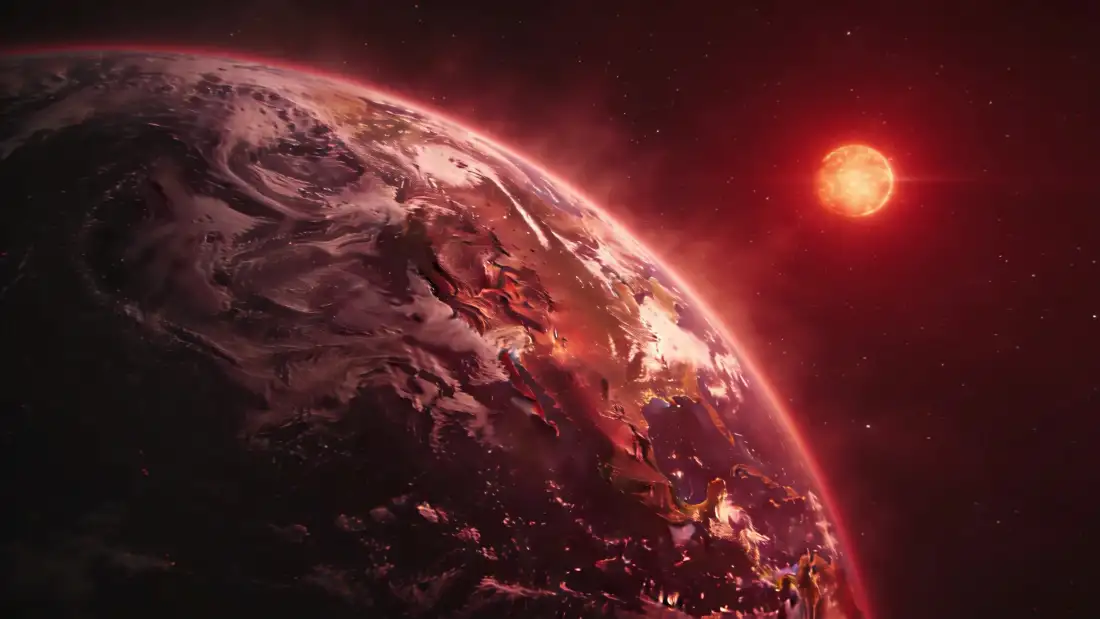
Astronomers discovered a faraway planet called LHS 1903 e without ever seeing it directly. By watching tiny changes in starlight, scientists figured out its size, weight, and temperature from 116 light-years away. Find out how they did it!

KEEP READING
Meet TOI-4529 b: A Newly Found Super-Earth

June 26, 2026

Meet TOI-4529 b: A Newly Found Super-Earth

Meet TOI-4529 b, a super-Earth discovered just 93 light-years away! This scorching hot world completes a full year in under six days and is nearly twice the size of Earth. Find out what scientists have learned — and what mysteries still remain.

KEEP READING
How Did We Find TOI-1080 b?

June 19, 2026

How Did We Find TOI-1080 b?

TOI-1080 b is a rocky world more than ten times heavier than Earth, yet its entire year lasts less than four days! Find out how scientists spotted this faraway planet using two clever tricks — a tiny dip in starlight and a subtle stellar wobble.

KEEP READING
Say Hello to GJ 3090 c, a Mini-Neptune

June 19, 2026

Say Hello to GJ 3090 c, a Mini-Neptune

Meet GJ 3090 c, a world 73 light-years away that zips around its star in just 16 days! This mini-Neptune doesn't exist anywhere in our solar system, and scientists are working hard to unlock its secrets — one careful clue at a time.

KEEP READING
TOI-4336 A c: Getting to Know a Super-Earth

June 17, 2026

TOI-4336 A c: Getting to Know a Super-Earth

TOI-4336 A c is a super-Earth spotted 73.5 light-years away, where a year lasts just 7.59 days! Scientists are still piecing together what this world is made of — and the answers might surprise you.

KEEP READING
Could TOI-2257 b Be Friendly to Life?

June 15, 2026

Could TOI-2257 b Be Friendly to Life?

TOI-2257 b is a planet 188 light-years away that sits in the zone where liquid water might be possible. Scientists don't know yet if it could support life, but the clues so far make it one of the most interesting worlds worth watching.

KEEP READING
How Long Would It Take to Reach Barnard d?

June 14, 2026

How Long Would It Take to Reach Barnard d?

Barnard d is one of the closest exoplanets to Earth, but even the fastest spacecraft ever built would take thousands of years to get there. Find out how far six light-years really is and what this small, scorching world is actually like.

KEEP READING
Proxima Cen d: A World 4.2 Light-Years From Earth

June 11, 2026

Proxima Cen d: A World 4.2 Light-Years From Earth

Proxima Cen d is a tiny planet orbiting the closest star to our Sun, just 4.24 light-years away. Scientists found it by watching the star wobble — but what this strange little world is actually like remains a mystery.

KEEP READING
Meet GJ 887 d: A Mini-Neptune Around a Small Red Star

June 11, 2026

Meet GJ 887 d: A Mini-Neptune Around a Small Red Star

Only 10.7 light-years away, a small red star called GJ 887 has a planet our solar system doesn't — a mini-Neptune! Find out how scientists discovered GJ 887 d, what it might look like inside, and why this chilly world helps us understand planets across the universe.

KEEP READING
TRAPPIST-1: A Family of Worlds Around One Star

June 10, 2026

TRAPPIST-1: A Family of Worlds Around One Star

About 40 light-years away, a tiny, dim star called TRAPPIST-1 has seven planets circling around it. One of them, TRAPPIST-1 f, is almost exactly the same size as Earth — so scientists are watching this whole system very closely.

KEEP READING